
Who might benefit from high tibial osteotomy?
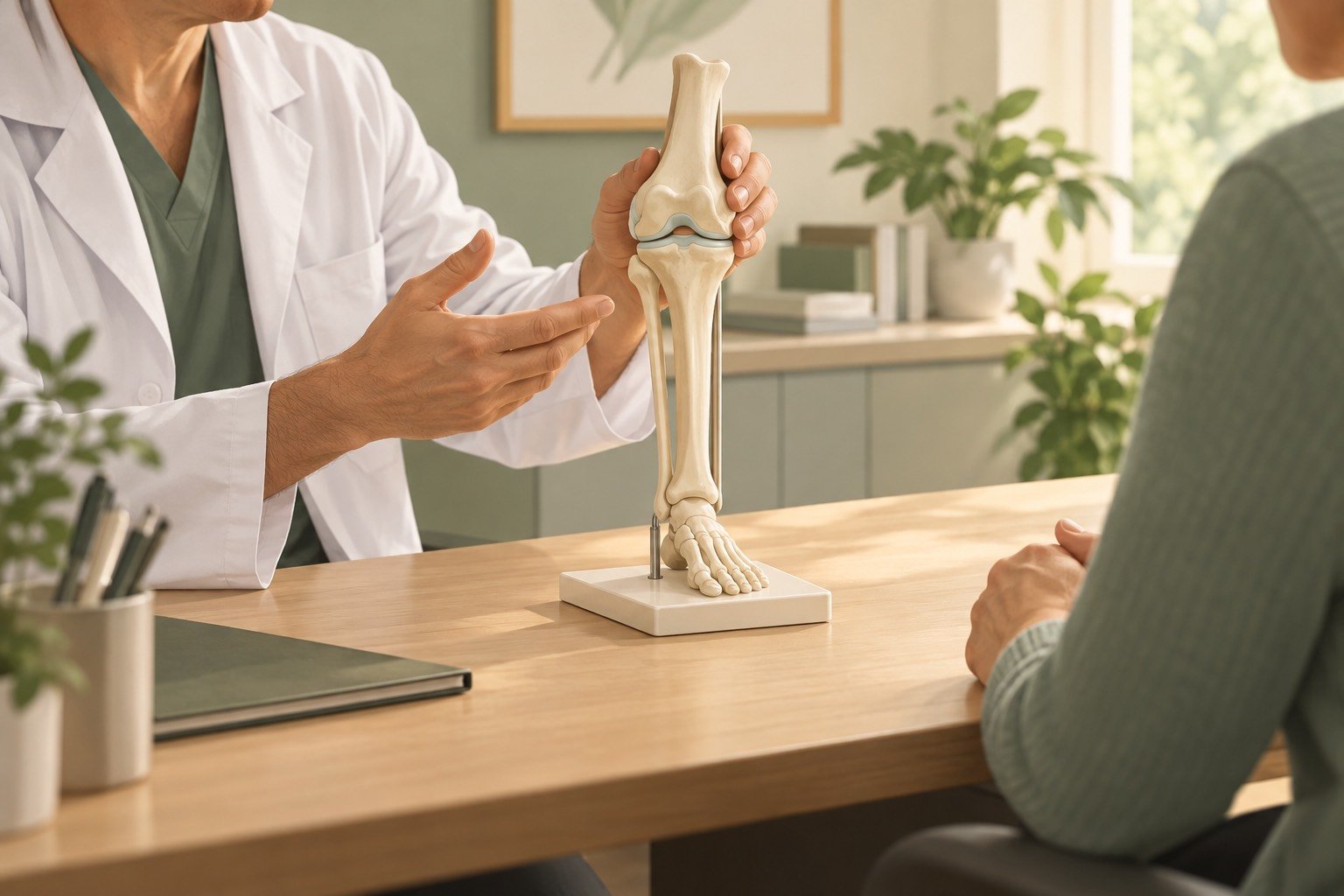
AI-generated illustration. This is not a real patient or a diagnostic image.
High tibial osteotomy changes the leg's weight-bearing axis through a controlled cut in the upper shinbone. The aim is to reduce pressure on the overloaded part of the knee and redirect load towards a better-preserved area.
Who may be suitable?
It is considered particularly in selected patients with osteoarthritis affecting one compartment and an associated alignment problem. Activity level, joint movement, ligament condition, cartilage in other compartments and general health are assessed together.
The decision is therefore not based solely on age or osteoarthritis on an X-ray. There is no strict age limit appropriate for everyone. Other treatments may be more suitable for advanced, widespread joint damage.
What should you expect?
The operation does not turn damaged cartilage into entirely new cartilage. It aims to reduce symptoms and preserve the joint by changing load distribution. Bone healing and rehabilitation take time.
It cannot be guaranteed to prevent the need for replacement for a particular number of years. Some patients later need a replacement, and previous osteotomy may make planning that operation more complex. Benefits, risks and alternatives should be discussed in this long-term context.
Sources
This article provides general information. Individual diagnosis and treatment require a clinical assessment.