
How does a broken bone heal?
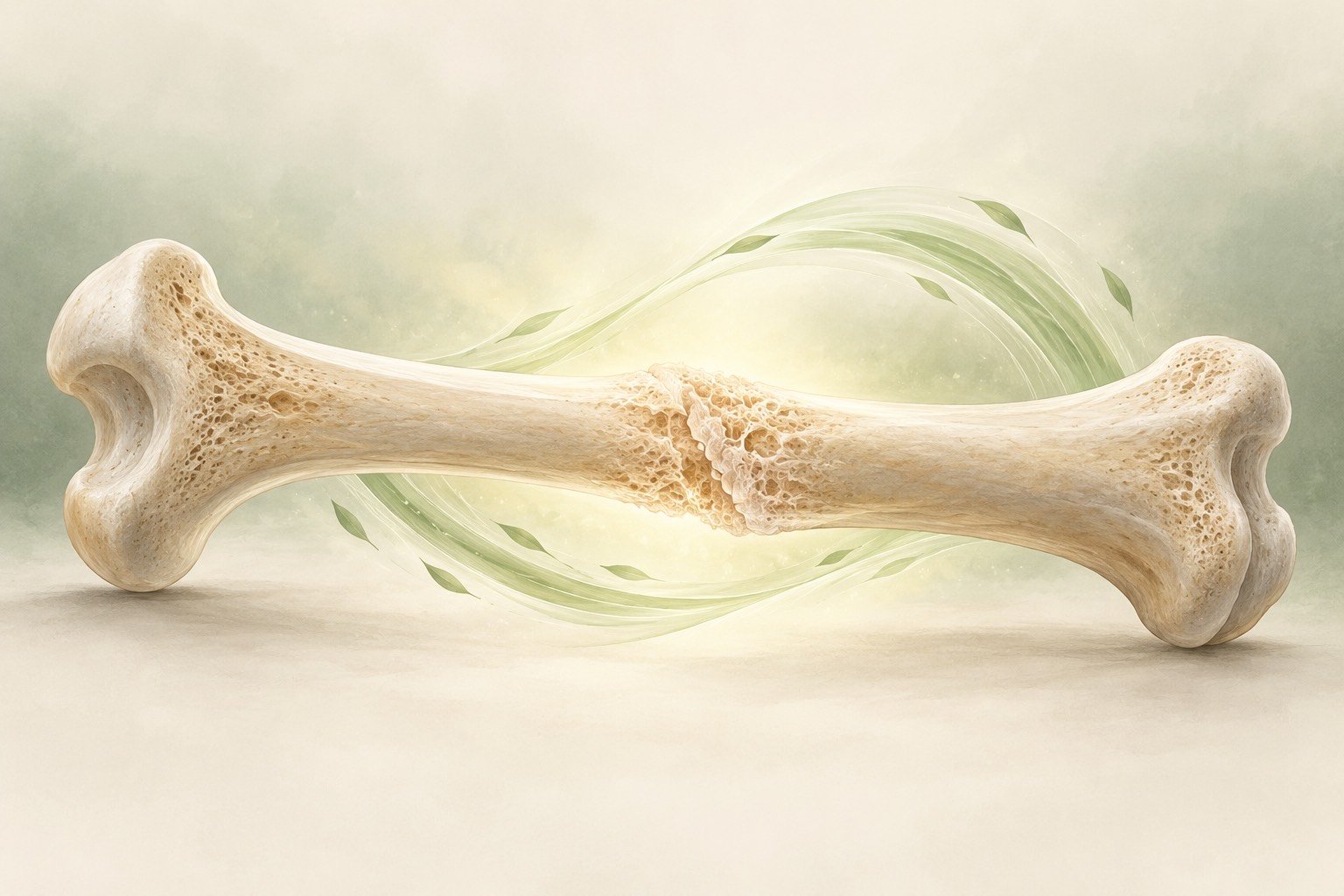
AI-generated illustration. This is not a real patient or a diagnostic image.
A fracture disrupts the continuity of a bone, and the body immediately begins repair. This is more than the broken ends simply sticking together: it is biological rebuilding involving cells, blood vessels and surrounding tissues.
Stages of repair
Bleeding, a clot and an inflammatory repair response initially develop around the fracture. Healing cells arrive, and a network of blood vessels and supporting tissue develops. In many fractures, a softer bridge forms first, followed by harder, mineralised new bone called callus.
During subsequent remodelling, this structure adapts to the loads the bone carries. This stage can last much longer than the first signs of union. Some very rigidly fixed fractures can heal directly without a large, obvious callus.
The balance needed for healing
Adequate blood supply and an appropriate mechanical environment are both needed. Excessive movement, infection or severe soft tissue injury can disrupt the process. Rehabilitation aims to preserve movement and function within safe limits, rather than force this biology. This is why weight-bearing decisions should be made with the team overseeing recovery.
Sources
This article provides general information. Individual diagnosis and treatment require a clinical assessment.