
Why are fractures extending into a joint different?
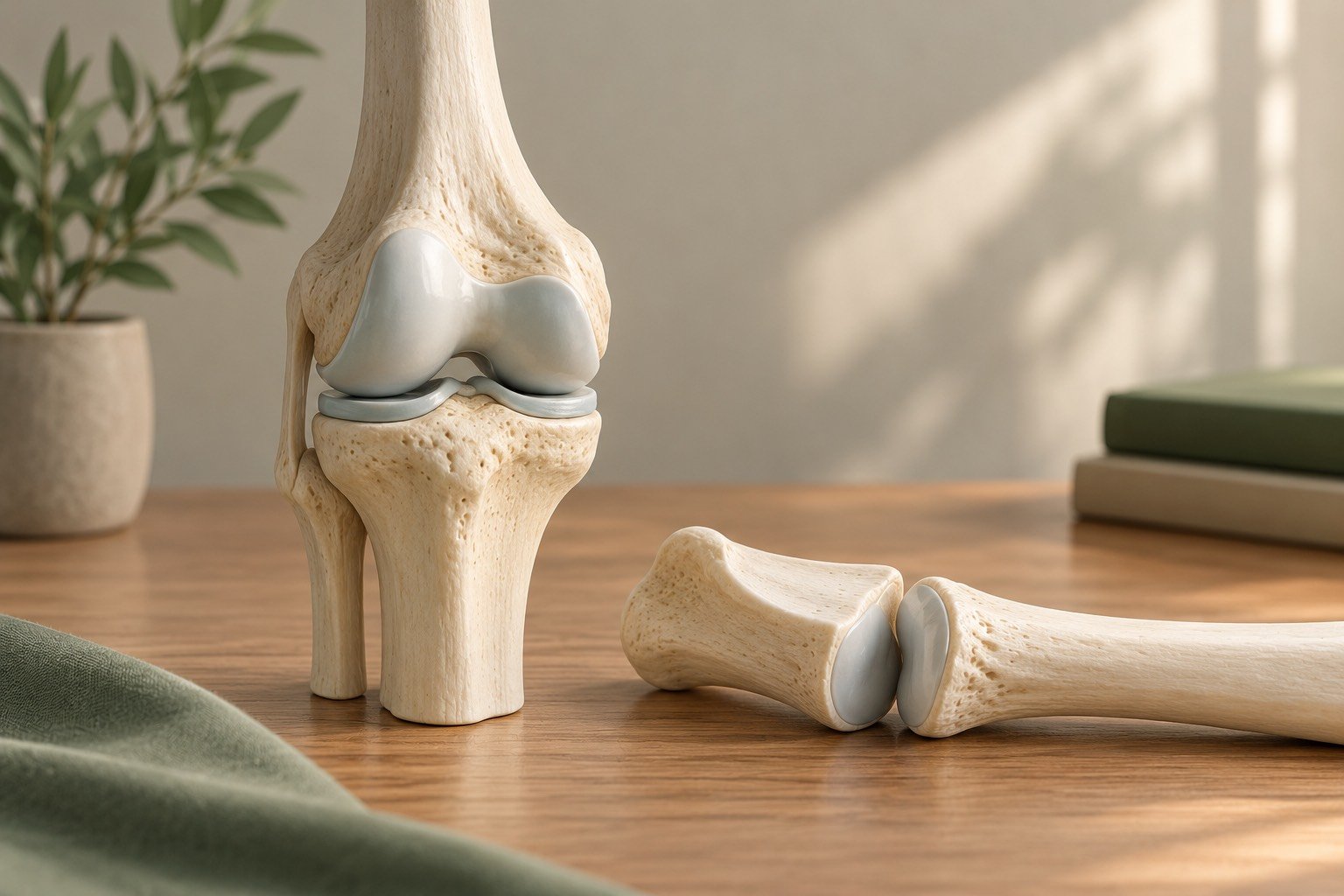
AI-generated illustration. This is not a real patient or a diagnostic image.
Fractures extending into a joint can affect the joint surface and cartilage as well as the bone. Treatment therefore aims to preserve how the joint carries load, not simply to join the bone fragments.
What is assessed?
Steps or depressions in the surface, joint stability, bone alignment and ligament injuries matter. Skin, muscle and circulation can also affect treatment timing. Severe swelling in particular may require staged surgery.
There is no single displacement threshold in millimetres that makes surgery mandatory for every joint and fracture. Some fractures can be monitored without surgery; others require surgery to restore joint congruity and stability.
Does healing eliminate all risk?
No. Initial cartilage damage can lead to post-traumatic osteoarthritis even after good correction and union. This possibility does not necessarily mean surgery has failed.
Preserving joint movement when appropriate matters, but the timing of weight-bearing is a separate decision. Follow-up and individual rehabilitation help balance reducing stiffness against protecting the fracture.
Sources
This article provides general information. Individual diagnosis and treatment require a clinical assessment.